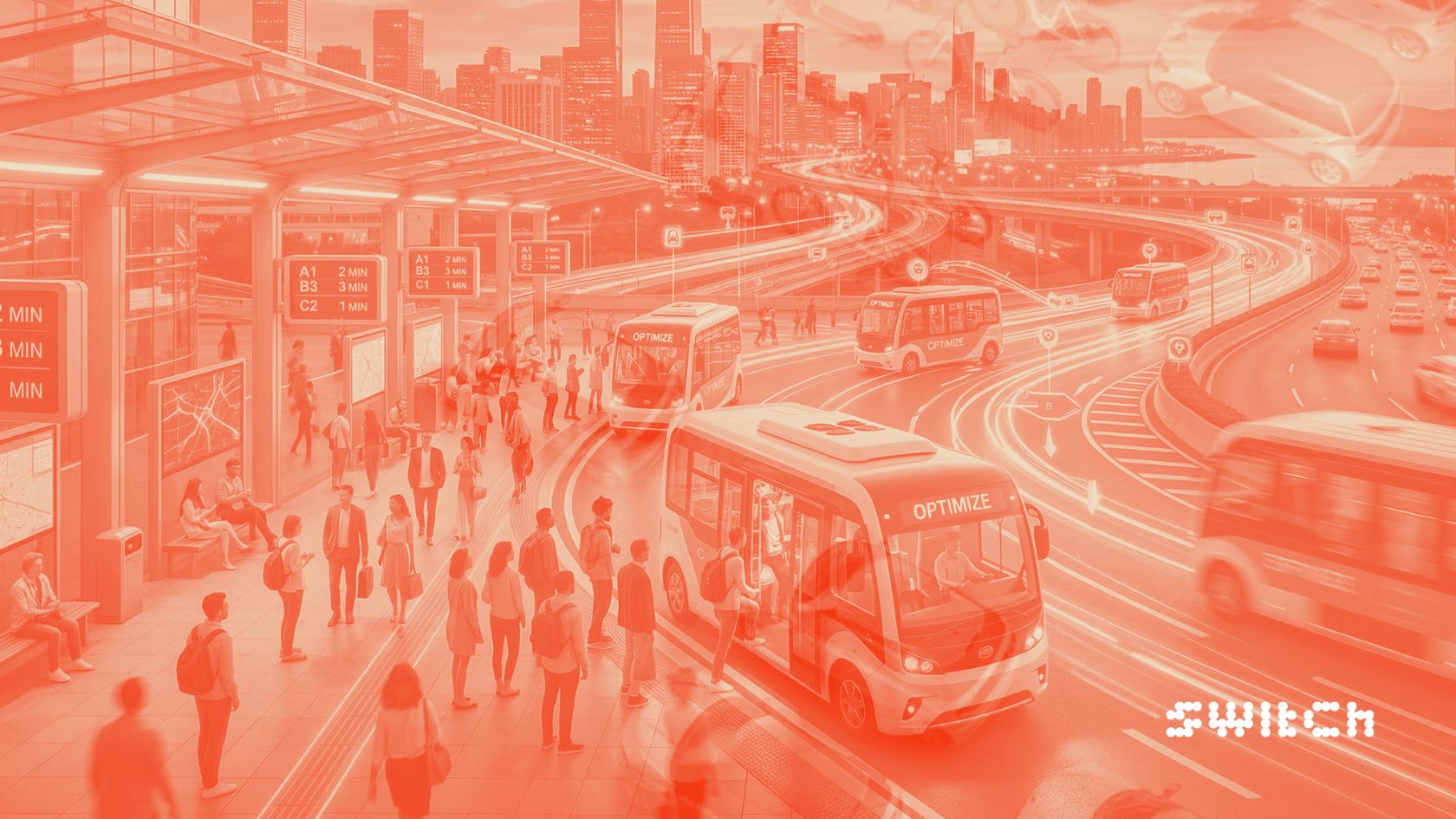
Demand-Responsive Transport (DRT) offers a flexible, efficient, and often more sustainable alternative to fixed-route public transport, particularly in areas with lower ridership or during off-peak hours. However, one of the most common challenges faced by fleet managers and on-demand mobility operators is managing passenger waiting times. Long waits can significantly impact user satisfaction, fleet utilization, and even the city’s perception of the service.
The Hidden Costs of Long DRT Waiting Times
While seemingly just an inconvenience, extended waiting times in DRT systems carry several hidden costs:
- User Satisfaction and Retention: Passengers who consistently experience long waits are less likely to reuse the service. This directly impacts ridership growth and customer loyalty.
- Fleet Utilization Inefficiency: Paradoxically, long waiting times can occur even when vehicles are available but poorly positioned. This leads to inefficient asset utilization, where a valuable resource (your fleet) isn’t being used to its full potential.
- City Perception and Public Trust: A DRT service is often part of a city’s broader mobility strategy. Poor service quality due to long waits can erode public trust in innovative transport solutions and reflect negatively on city initiatives.
Why Traditional Dispatching Models Fail Under Fluctuating Demand
Traditional DRT dispatching systems are largely reactive. They assign vehicles to trip requests as they come in, often using rule-based algorithms or human dispatchers. While effective for stable, predictable demand, these models struggle under fluctuating conditions:
- Lack of Foresight: They cannot anticipate surges or dips in demand, leading to vehicles being concentrated in one area when demand is about to spike elsewhere.
- Suboptimal Vehicle Positioning: Without predictive capabilities, vehicles might end up in “dead zones” after completing a ride, far from where the next demand is expected.
- Inefficient Routing: Reactive dispatching often prioritizes the immediate request, potentially leading to routes that are not globally optimal for the entire system or future requests.
How Predictive Analytics Can Anticipate Trip Requests and Rebalance Vehicles in Advance
The solution lies in shifting from a reactive to a proactive approach through predictive analytics and AI. Imagine a system that knows, with a high degree of probability, where and when the next wave of trip requests will occur.
Predictive analytics leverages historical data, real-time traffic conditions, events, weather, and even social trends to forecast demand patterns. By analyzing these complex datasets, an AI can:
- Forecast Demand Hotspots: Identify specific geographic areas and time windows where demand is likely to increase.
- Predict Trip Intent: Estimate the number of passengers and potential destinations, allowing for better vehicle matching (e.g., matching larger vehicles to anticipated group bookings).
- Proactive Rebalancing: Based on these predictions, the system can intelligently rebalance the fleet, moving vehicles to anticipated high-demand areas before requests even come in. This significantly reduces the time it takes for a vehicle to reach a waiting passenger.
Real-Time Coordination Between Supply, Demand, and Infrastructure
Beyond just predicting demand, the true power of predictive optimization comes from its ability to orchestrate real-time coordination across all elements of the DRT system:
- Dynamic Vehicle Distribution: Vehicles are not just dispatched for current rides but strategically repositioned based on future predictions.
- Optimized Routing: AI algorithms continuously adjust routes in real-time, considering traffic, existing bookings, and incoming predictions to minimize detours and maximize efficiency.
- Seamless Integration: The system integrates data from various sources – GPS, booking platforms, traffic APIs, and more – to provide a holistic view and enable intelligent decision-making.
The result is a highly agile and responsive DRT service where vehicles are almost always exactly where they need to be, drastically cutting down passenger waiting times.
Measuring Success: KPIs and Benchmarks for DRT Performance
To ensure predictive optimization is delivering results, key performance indicators (KPIs) must be tracked:
- Average Passenger Waiting Time: The most direct measure of success. A significant reduction indicates improved efficiency.
- On-Time Performance: The percentage of rides that meet or exceed scheduled pickup times.
- Vehicle Utilization Rate: How effectively the fleet is being used, indicating fewer idle hours and more productive service time.
- Passenger Satisfaction Scores: Feedback from users on their overall experience, especially regarding waiting times.
- Operational Cost Per Ride: While improving service, predictive optimization should also lead to cost efficiencies through better routing and resource allocation.
The SWITCH Connection: Bridging Planning and Execution
At SWITCH, we understand that bridging the gap between predictive planning and real-time operational execution is crucial for optimizing DRT services.
Our SWITCH AI Agent acts as the intelligent orchestrator. It continuously processes vast amounts of data, predicting demand patterns, traffic conditions, and potential service disruptions. Based on these advanced predictions, the AI Agent intelligently adjusts operational strategies in real-time, effectively forecasting where and when vehicles are needed.
This predictive intelligence then seamlessly feeds into Urban CoPilot, our operational layer. Urbancopilot dynamically manages vehicle distribution and dispatch, taking the insights from the AI Agent and translating them into concrete actions. It ensures that vehicles are not merely reacting to current requests but are proactively positioned and routed to meet anticipated demand, minimizing empty miles and, most importantly, significantly reducing passenger waiting times.
Together, the SWITCH AI Agent and Urbancopilot create a powerful synergy that transforms DRT operations. They empower fleet managers to move beyond reactive dispatching, leveraging AI to anticipate future demand and dynamically adjust fleet operations. This not only cuts down waiting times, enhancing user satisfaction, but also improves overall service reliability and operational efficiency, making DRT a more attractive and sustainable mobility solution for everyone.
Discover more